Crop Intellect
Introduction
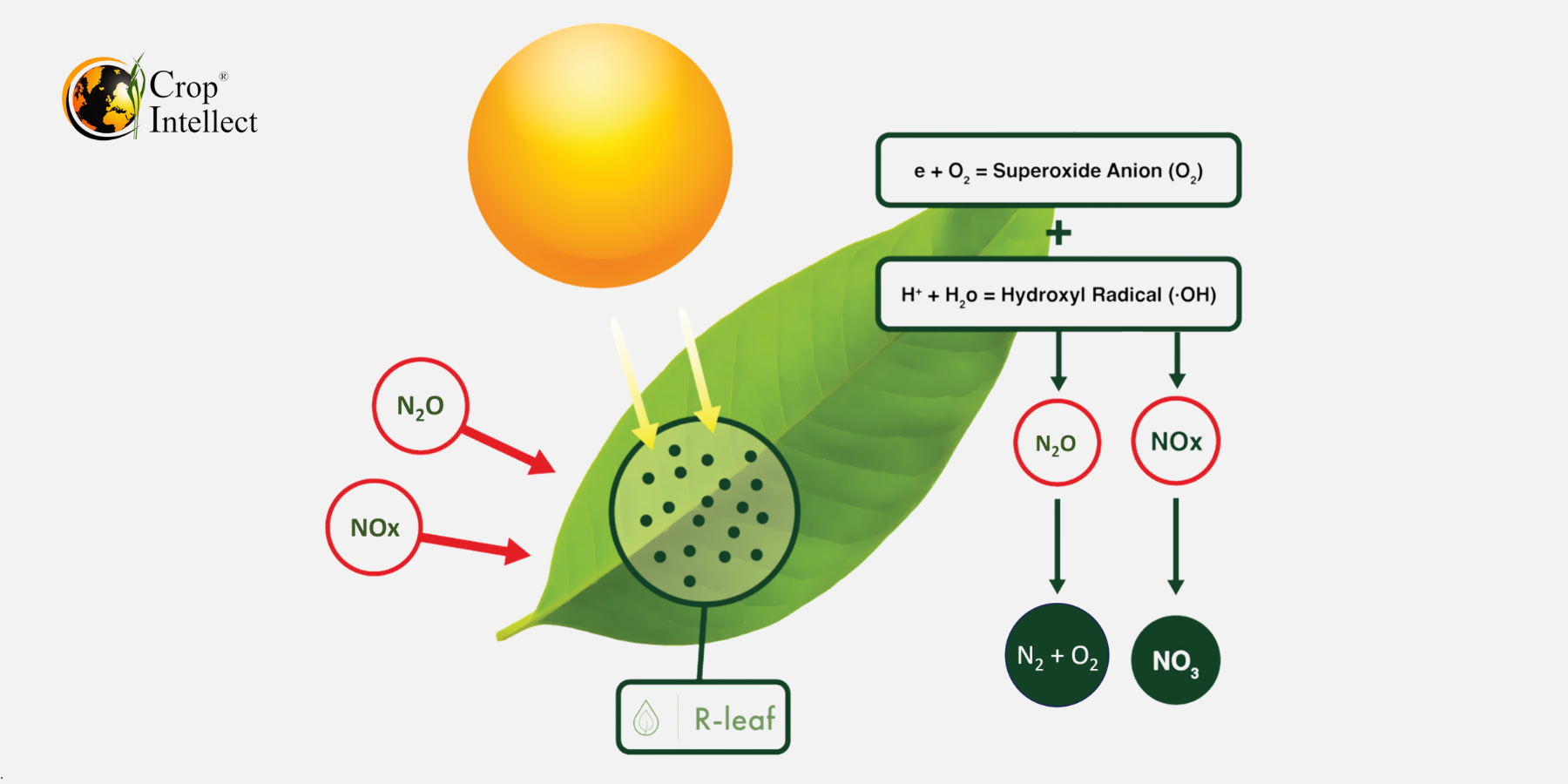
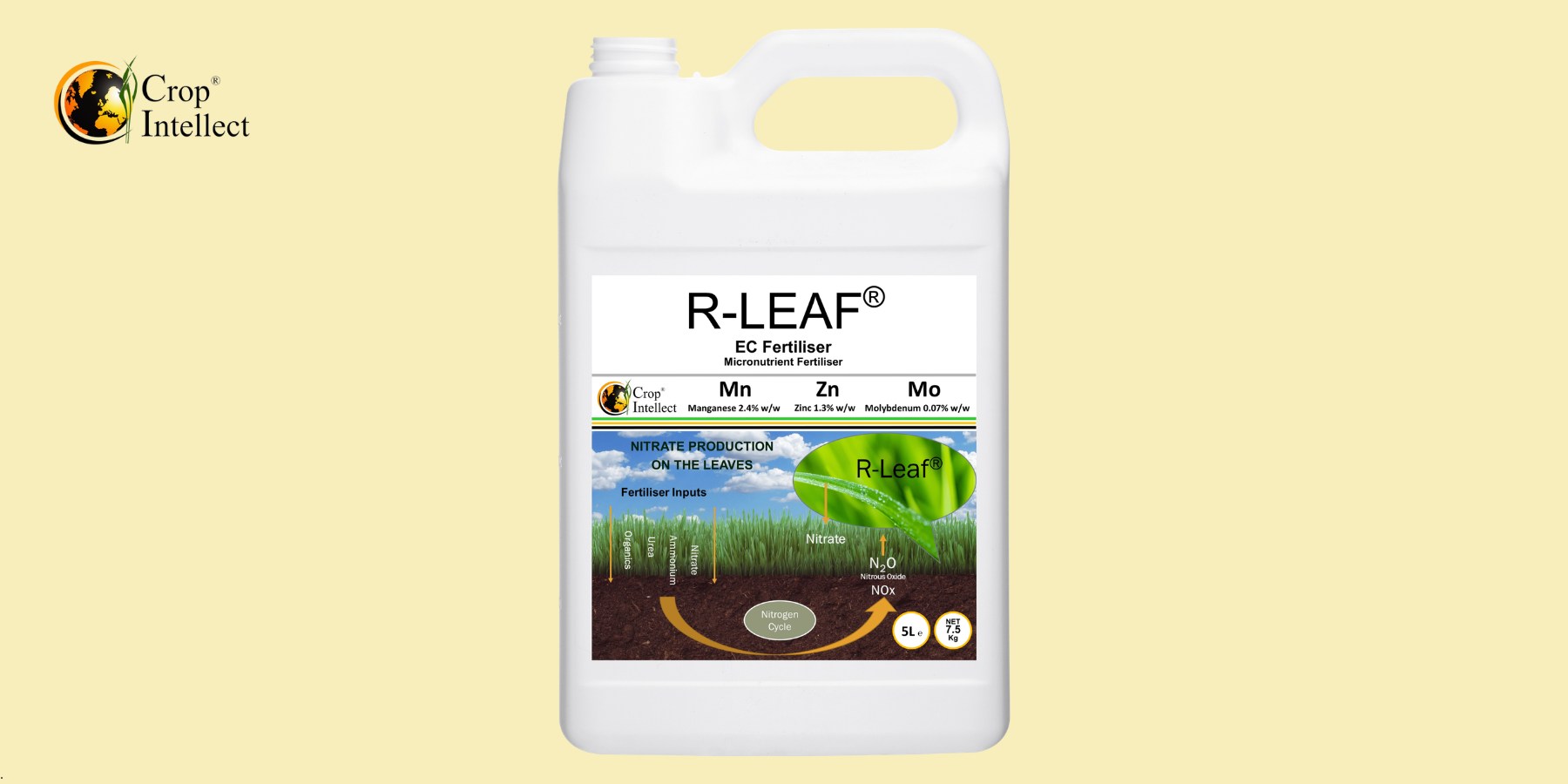
Crop Intellect is an innovative agri-tech company developing sustainable solutions to reduce greenhouse gas emissions in agriculture whilst increasing crop productivity. Its flagship product, R-leaf®, is a photocatalytic foliar treatment designed to convert Nitrogen Oxides to Nitrate and remove the greenhouse gas Nitrous Oxide from the atmosphere.
The National Innovation Centre for Data (NICD) delivers activity through the Hartree Centre North East Hub as part of the wider Hartree Centre SME Hubs, which provide regional advanced digital technology support to UK industry. Through the Innovate UK BridgeAI programme, Crop Intellect partnered with NICD to strengthen its data capabilities and support the development of scalable, data-driven approaches to measuring environmental impact.
The challenge: scaling measurement of greenhouse gas removal
Validating the effectiveness of R-leaf® requires field measurements using specialist gas analysis equipment, followed by appropriate validated calculations to determine greenhouse gas removal.
This process presented several challenges:
- Manual, spreadsheet-based workflows that were time-intensive
- Large volumes of raw data requiring significant processing
- Fragmented data collection across field and laboratory environments
- Limited ability to scale analysis or generate predictive insights
To support the scale-up potential of the technology, Crop Intellect sought a more efficient approach that would reduce manual effort and enable future predictive modelling.
The approach: a collaborative, skills-focused BridgeAI project
Through the BridgeAI programme, NICD worked with Crop Intellect to deliver a project focused on both technical development and capability building.
At the outset, NICD assessed the available data and identified that a single season of field data would not be sufficient to build a robust predictive model. As a result, the project prioritised establishing strong data foundations and enabling the business to scale its analytical capabilities over time.
NICD collaborated closely with the Crop Intellect team through a series of structured, hands-on sessions. These sessions introduced:
- Python-based data processing and automation
- Development environments using VS Code
- Version control and collaboration using Git and GitHub
- Exploratory data analysis and visualisation using pandas and matplotlib
- Consideration of modelling approaches for future development
A key milestone in the project was the development of a reproducible data pipeline, enabling the transition from manual processing to automated workflows.
Knowledge transfer was embedded throughout, ensuring that Crop Intellect could apply these approaches independently beyond the project.
"Everything we did had the intention of building and helping the team at Crop Intellect to develop and improve beyond the project. Therefore, each session was tailored towards upskilling Crop Intellect, ensuring clear understanding of the topics and the direct relevance to their work.”
Dr Owen Li, Data Scientist, National Innovation Centre for Data
The solution: an end-to-end automated data pipeline
NICD and Crop Intellect developed a reproducible data processing pipeline to transform raw LI-COR field measurements into structured, analysis-ready datasets.
The solution included:
- Automated data cleaning and structuring
- Outlier detection and filtering
- Streamlined calculation of gas concentration and flux values
- Preparation of datasets for further analysis and modelling
This replaced manual spreadsheet-based processes with a consistent and scalable workflow, improving both efficiency and reliability.
In parallel, the project explored the use of environmental variables, including weather data, to inform predictive modelling. While further data collection is required, this work established a clear direction for future development

Outcomes and impact: improving efficiency and enabling future innovation
The project delivered measurable benefits for Crop Intellect, supporting both immediate operational improvements and longer-term innovation.
Automating data processing has reduced manual effort and increased the speed and consistency of analysis. Yusuf Khambhati, Research Scientist, Crop Intellect says:
“The biggest impact (of this project) would be the efficiency, it got easier to process the data. And secondly, we learned how to organise the data because we had a few different systems working (at the same time).”
Alongside this, the business has adopted more structured approaches to data collection, organisation, and processing, addressing previous challenges with fragmented systems and improving overall data usability.
The project also contributed to increased internal capability, with the development of in-house expertise in data processing and analysis, enabling Crop Intellect to continue building on the work independently and to apply these approaches across future projects.
Importantly, the collaboration has defined a clear pathway towards predictive modelling. By identifying the data requirements needed to build accurate models, the project has provided a roadmap for future development as additional data is collected.
"This season has not started yet, but now we are equipped with the tools to (gather data points more efficiently) this year”.
Yusuf Khambhati, Research Scientist, Crop Intellect
Working with NICD: a collaborative and supportive partnership
A key strength of the project was the collaborative approach taken by NICD, combining technical expertise with tailored support to meet Crop Intellect’s needs.
NICD worked closely with the team to ensure that complex data science concepts were accessible and practical, supporting learning alongside delivery and building confidence throughout the engagement. The project delivered measurable benefits for Crop Intellect, supporting both immediate operational improvements and longer-term innovation.
Yusuf Khambhati, Research Scientist, Crop Intellect says:
“When I was learning the Python language, I was starting with very limited knowledge and they were very patient and made it super interesting as well, so I was able to learn a lot”.
Clear communication and a structured delivery approach ensured the project remained aligned with business objectives while allowing flexibility to explore improvements and future opportunities.
The collaboration provided both immediate value and a strong foundation for continued development, equipping Crop Intellect with the tools and understanding needed to build on the work independently.
Owen Li, Data Scientist at NICD says:
“This project allowed me and the NICD team to apply our expertise to Crop Intellect’s data and provide valuable insights. When we delivered these insights on Crop Intellect’s data and methodologies, Yusuf and the team were curious, open-minded, and inquisitive. This sparked thought-provoking discussions and gave Crop Intellect interesting avenues of future work to embark on beyond this project.”
Looking ahead: scaling impact through data
With improved data infrastructure and new technical capabilities in place, Crop Intellect is well positioned to build on this work.
As additional field data becomes available in future growing seasons, it will enable the technology to scale through further development of predictive models and continue to make more efficient the validation of the environmental impact of R-leaf®.
“Yusuf and the Crop Intellect team came to each session with enthusiasm and an eagerness to learn, making every session enjoyable and communication easy, enabling strong collaboration between the two teams.”
Dr Owen Li, Data Scientist, National Innovation Centre for Data
Discover more about Crop Intellect by visiting their website.
You can read more of our case studies and sign up to our newsletter to keep up to date with our latest news, events and developments.