Port of Tyne
The company
Port of Tyne is the authority responsible for safe navigation from the mouth of the River Tyne, to Wylam, 17 miles inland. They undertake a range of cargo operations, including the loading, unloading, and transport of containers, logistics and warehousing.
Port of Tyne's vision is to be the UK's safest, most progressive customer-focused and environmentally sustainable port. Embracing data-driven strategies is crucial to achieving this vision.
By leveraging data insights, Port of Tyne enhances its operational efficiency, reduces environmental impact, and ensures sustainable growth.
Fasih Ul Haq is a Business Analyst at Port of Tyne, working as part of the Business Transformation team “A big part of our focus is on the data the Port generates and how we can better utilise it to drive insights and decision-making across the Port”.
Describing the role of business transformation within the Port, Fasih said “We generally look at systems across the Port to see how we could upgrade them, including implementing new systems that are easier to access and allow for data sharing.”
The problem
Port of Tyne were monitoring CO₂ emissions using Excel spreadsheet software. This process was time consuming to update and could be subject to user error. Fasih explains, "Our Environment and Sustainability Leader, James Wright, is responsible for generating the annual reports on how much carbon the Port's associated activities generate across the year. This process was done manually on spreadsheets, which was time-consuming and lacked real-time insight".
It was clear that a move towards a more robust and automated mechanism for analysing and visualising emissions data was needed to solve this problem.
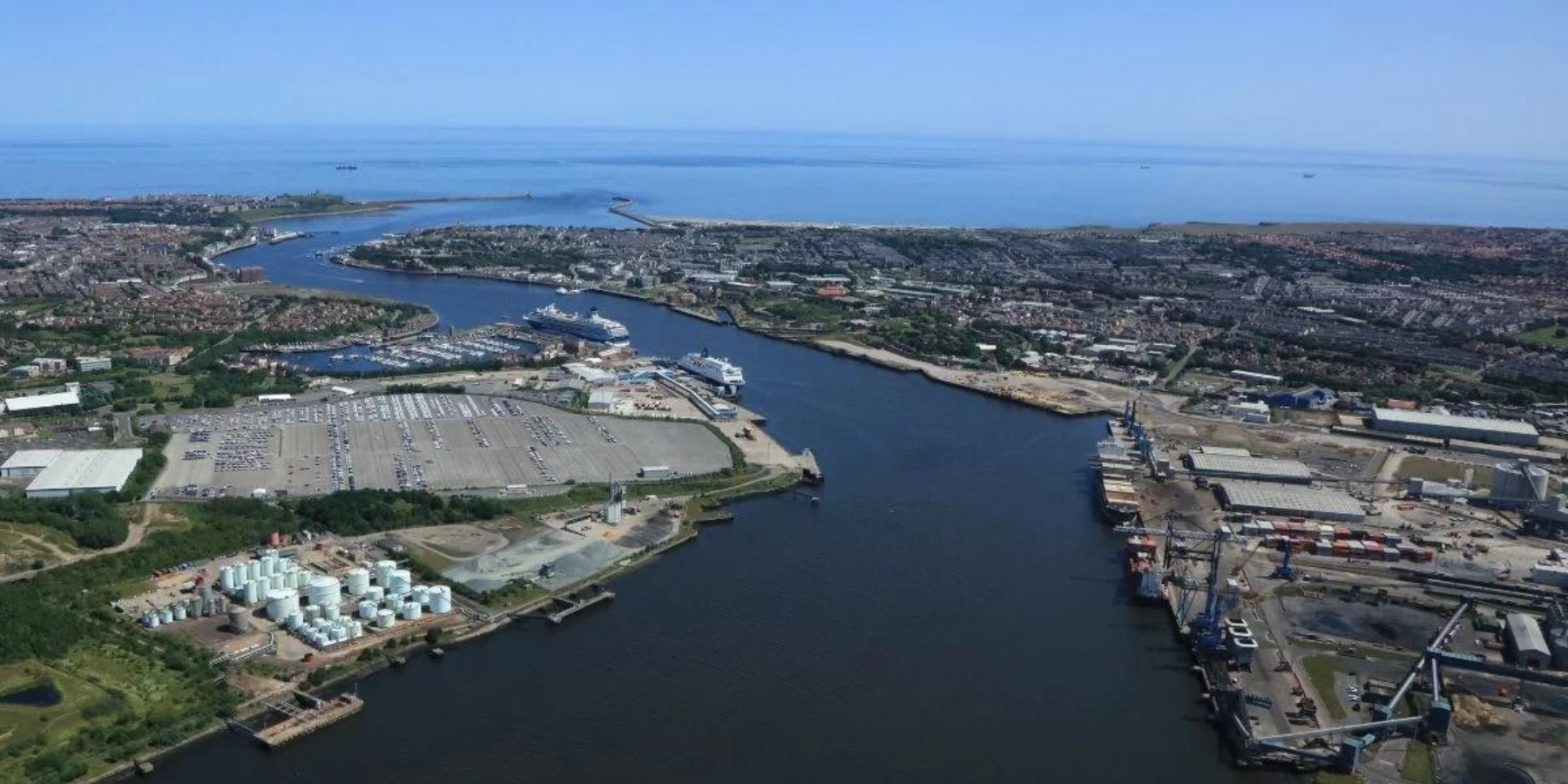
Image credit: Newcastle University
The goal
The project's main goal was to reduce the carbon footprint across the Port of Tyne and automate the carbon tracking processes.
Fasih states, "We wanted something that was more real-time and could be looked at regularly. The idea was to track how much carbon we were producing on a daily or weekly basis and detect anomalies so corrective action could be taken immediately."
The Data Skills project had three deliverables:
- An automated workflow for calculating CO₂ footprint.
- An interactive dashboard for:
- Operational managers
- Energy Reduction Team
- Leadership Team
- Operational managers
- A monthly report on CO₂ footprint for the Leadership Team.
This approach aimed to improve performance on carbon emission metrics to save cost, reduce environmental impact and improve reporting efficiency.
"Our end goal was to create a dashboard where we could track the fuel consumed and carbon generated for one specific business area as a start. We chose the Container Terminal within the Port," Fasih explains. The Container Terminal was selected because it is a well-defined area of the business, with extensive data logs for every activity including emissions data.
The result
The implementation of the automated workflow for calculating CO₂ and interactive dashboard yielded impressive results. "We delivered the dashboard, and the feedback was overwhelmingly positive," says Fasih.
"It allowed us to set targets on carbon reduction within the Terminal to reduce carbon by 5% year on year. We now see a downward trend in the carbon footprint in this operation over time".
The project provided environmental benefits by enabling more precise tracking of the port's carbon footprint. Additionally, it helped the Port of Tyne team to become more familiar with data science and data transformation, enabling them to extend this knowledge to other business areas.
Image credit: Canva
Unlocking potential through upskilling
The project, led by Dr Fergus McClean with valuable contributions from Dr Paul Goodman, demonstrated the advantages of partnering with NICD to introduce new skills and innovative practices into the workplace. Fasih reflected on the team’s experience, stating, "Data science and data analysis itself was not a skill that was native to the Port. We had smart people with a comprehensive working knowledge of Excel, but there was a need to upskill colleagues with more advanced data skills."
The collaboration involved intensive training and hands-on sessions. "Initially, the project was to be three to four months with a defined number of meetings. We had biweekly sessions on Fridays where we would code and get to grips with Python and programming environments," Fasih recounts.
The National Innovation Centre for Data team provided crucial support throughout the project. "The sessions were really collaborative. I think the most important thing was everyone learned at their own pace. NICD provided us with resources and examples that would get us started. The positive response from everyone in the team, including the Port, was motivational. We would have sessions internally outside of our pair programming sessions to go over what was discussed and push the project forward," says Fasih.
The learning experience was broad and deep. "The team learned how to use Python, different code editors like VS Code, how to set up virtual environments using software like Anaconda, how to use GitHub for version control, and various data transformation libraries like pandas and data visualisation libraries like Plotly Dash," Fasih explains.
This upskilling has had a lasting impact on the Port. Fasih concludes "We've extended this concept to other business areas. James is leading it with the help of our new Data Analyst Graduate. We're now creating more dashboards for other business areas".
“Previously, these (data science) concepts were unfamiliar, leading the Port to defer to third parties and focus on what they already knew. Now, there is a growing appetite within the Port to be more adventurous and tackle these tasks ourselves.”
Fasih Ul Haq, Business Analyst, Port of Tyne
“It’s always incredibly rewarding when we get to see new skills being used to drive real impact within a business. The team at Port of Tyne were able to take what they learned within the project and apply this to new areas, delivering valuable insights across the organisation.
This is exactly what we aim for at NICD, and we are excited to see where data science can go at Port of Tyne into the future.”
Dr Fergus McClean, Data Scientist, NICD

Image credit: Canva
Business impact
The project had a significant impact on the Port's operations. Fasih highlights, "One outcome of the project was that we've become a lot more familiar with what data science is and what data transformation looks like. Previously, these were more abstract terms that the Port looked to third parties for support. Now, there's an appetite within the Port to be more adventurous and we now have the skills to do this ourselves."
The success of the initial dashboard has laid the groundwork for further projects. "We've undertaken a couple more data analysis projects internally and created a few more dashboards. With our Data Analyst Graduate in post, the motivation within the Port is now to do more work internally rather than depending on external organisations," Fasih notes.
Working with the National Innovation Centre for Data was instrumental in this transformation. "The communication with the National Innovation Centre for Data team was brilliant. Even after the project ended, I have consulted them on diverse topics, and the response has always been welcoming," Fasih remarks.
By partnering with the National Innovation Centre for Data, the Port of Tyne has made significant strides towards achieving its goal of carbon neutrality, demonstrating how strategic data utilisation can drive impactful environmental initiatives and operational efficiencies.
“I highly recommend NICD to businesses that lack data expertise and want to better utilise their data. Working with NICD will open their eyes to a wide range of available technologies.”
Fasih Ul Haq, Business Analyst, Port of Tyne
To find out more about Port of Tyne, visit their website.
You can read more of our case studies and sign up to our newsletter to keep up to date with our latest news, events and developments.

Our Discovery workshop
Our Discovery workshops enable you to explore the potential of your data and understand the benefit you could gain before committing to a full-scale project.